Monday, March 5, 2012

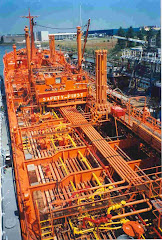
Berlian Laju Tankers accused of diverting US$ 135 million in cash from company accounts


Last week BLT informed the Singapore Stock Exchange that it has defaulted on its interest payments on bond loans and bank debt.  BLT called in FTI Consulting as a financial adviser for its debt payment freeze and now it has added leading Asian insolvency specialist, Borelli Walsh.  Now there are serious allegations from Delos Shipping that BLT’s largest shareholders, the Surya family, have diverted $135 million in cash from company accounts to their coal business. Will all these high paid advisors be able to turn around this lame duck company or will the fees just increase creditors’ losses?

Until recently, BLT was everyone’s darling in the market. As a rapidly growing company it was an ever-expanding source of brokerage fees and high yield financial placements. Industry rumor has it that AMA Capital Partners earned a 100% mark-up in selling BLT the Chembulk business from the original price that AMA paid Doug MacShane for the Connecticut-based firm. This acquisition needed massive financing, and leasing firms and banks earned exceptional financial yields.

Last year, BLT had to negotiate a massive $685 million senior debt restructuring by a 6-bank consortium plus a $90 million sale leaseback deal for four chemical tankers, including one new building under construction with Standard & Chartered (S&C). S&C also participated in the consortium deal that refinanced $593 million of BLT’s debt to repay 10 outstanding loans. Both the 6-bank consortium and S& optimistically considered the Surya Family’s involvement to make BLT as good as sovereign risk (albeit with the recent Greek PSI+ this sort of risk is what not is used to be….).

Yet, if you take a glance at the BLT balance sheet over the years, this was not a company that was ever making a lot of money. Historically, chemical tankers have seen return on assets below 10%. BLT promoted their Indonesian cabotage business, but in fact the Buana spin-off last year showed a small operation that accounted for only a relatively small part of BLT’s total turnover. Indeed Buana had made losses the previous year.

BLT also pointed investors to its low manning costs. We investigated these claims two years ago with MTM Singapore, who originally managed the Chembulk vessels. MTM told us that such assertions were false and misleading for chemical tankers in international trading. Crew costs for competent chemical tanker crews were converging and under constant upward pressure. One possible explanation could be that BLT was skimping on maintenance with very new vessels to keep costs so low. Declining maintenance standards is a common failure path for chemical tanker companies on the verge of bankruptcy that eventually leads to withdrawal of Majors approvals and increasing operating losses.

BLT’s computer glitch last spring on its accounts seemed rather disingenuous, especially when results later came out that showed widening losses in 2010. Was this a coincidence? Were BLT’s creditors diligent in their credit analysis in their restructuring negotiations last year? Why with such generous terms were there no requests for the Surya Family to support the operation with more equity as a condition for the debt restructuring?

Finally, after the declaration of default, I looked into a recent financial analysis of the company from major shipping investment bank. The analyst forecast a reasonable cash balance through 2011. For these reasons, I can sympathize with the ire of Delos’s Brian Laden. Clearly BLT and the Surya family owe Delos, as well as their other creditors, some serious explanations.


Effort to prevent triggering of Greek public debt credit default swaps: major control fraud with government collusion


S&P has declared that the Greek government is in default.  Most common sense definitions of default — failing to make payments on a timely basis, declaring your intention to default, etc. — have already occurred. Yet the International Swaps and Derivatives Association, in a nonpublic meeting of derivatives bankers, declared this to be a NONDEFAULT!  This leaves those bankers who earned a premium by selling Greek CDS instruments as insurance to the hapless purchasers with pure risk-free profit. This sad story is one of the largest government-sponsored financial swindles of all time!

This saga started in the U.S. with The Commodity Futures Modernization Act of 2000, sponsored by Texas Senator Phil Gramm. According to FusionIQ CEO Barry Ritholtz, Gramm did this as a favor to his wife Wendy who sat on the Board of Directors of Enron, which wanted to trade energy derivatives without oversight. The Bill was rushed through Congress in 2000 and signed into law by President Bill Clinton.

This rule change exempted CDSs from insurance oversight and led to a very specific economic behavioral change: Companies that wrote insurance had to explicitly reserve for expected losses and eventual payout in a conservative manner. Companies that wrote credit default swaps did not. AIG was permitted to underwrite over THREE TRILLION DOLLARS worth of derivatives, without any obligation to maintain any reserves against potential claims, leading to the notorious U.S. government bailout in the fall of 2008.

The E.U. hypocritically argues that they do not want to trigger these CDS instruments by a Greek sovereign default because it would reward ‘speculators’. In fact, these actions are blocking mainly banks hold these instruments as default insurance from being reimbursed for the premium money paid.

What EU authorities really want to avoid is any market-based pricing system outside of their control that objectively rates default risk in the Eurozone. The same perverse logic and self-denial applies to their constant railing against rating agencies that question the solvency of their member states, the viability of their debt load and the wisdom of E.U. debt deflation policies.

The E.U. has a badly undercapitalized banking system, where banks are considered quasi-public utilities and sovereign lending has been heavily subsidized. The single currency euro system makes heavy use of its commercial banks to finance public debt and does not require any reserves for possible losses, exhibiting the same pernicious mentality that led the U.S. authorities to allow their financial institutions to write CDS instruments freely without any backstop for losses. Public policy makers and politicians hide a multitude of sins….

It is said that the majority of the CDS instruments were underwritten by U.S. financial institutions and purchased by E.U. banks with weak balance sheets as a means of cover.

This E.U. political turn-say propaganda about the CDS trigger is just one of many E.U. manipulations that come at the expense of the general public at large. The looming question is whether saving this single currency union is worth the sacrifices of its members, when the burden sharing is so unequal and the results so pernicious in terms of low growth, asset misallocation, credit mispricing and high rates of unemployment.

Greek debt crisis: the Greek political elite just committed national suicide!


Only fools commit a nation to a course of action without providing any emergency alternatives in case of policy failure. Greece has signed off all its sovereign rights to its creditors for a half-baked debt exchange and a 130 billion bailout loan that resembles a Ponzi scheme and that the IMF’s debt viability studies deem insufficient.   Swedish finance minister, Anders Borg, cynically remarked that the agreement was not to solve the Greek problem, but to isolate the Eurozone from it. Greece has nothing to fall back on in the eventuality of a hard default and ejection from the EZ.
 
The third Hellenic Republic is now a dead letter. Greece is effectively a colony of the E.U.! The Greek political elite have sent Greece into oblivion as a nation, even pledging its gold reserves to E.U. Creditors.

The Greek political elite are obsessed with a failed ideology. For the last 30 to 40 years, being part of the E.U. was their sole national strategy. Instead of building a productive economy, opening markets for export of goods and services and developing a sense of national pride from economic accomplishment, the Greek political elite preferred artificial credit enhancement from Eurozone accession and E.U. transfer money to buy votes and support a corrupt, crony capitalism centered on a bloated public sector.

Eurozone membership (effectively a greater Deutschemark zone) wiped out local production and accelerated substantial E.U. import dependence. The artificially low interest rates led to massive asset misallocation and over indebtedness. The hard currency rates destabilized the Greek balance of payments without having currency depreciation or national monetary tools as an adjustment mechanism.

The E.U. initially looked the other way in the interest of economic integration, until Greece lost access to public markets and the crisis started to threaten Europe’s single currency union. The ensuing E.U. austerity measures resulted in classic debt deflation. From a public debt ratio of 110% GDP in October 2009, the ratio soared to the present 170-180% of GDP due to the E.U. program.

The latest E.U. imposed ‘voluntary’ PSI+ scheme forces substantial ‘haircuts’ on private creditors but gives E.U. public creditors seniority. This gives Greece alleged debt sustainability at 120% by 2020 – far higher than the 110% at the outset of the crisis! While the IMF questioned this restructuring scheme, the EU coerced them to recant.

The Greek political elite - and the middle class who supports them - have collectively sadomasochistic consciousness. They derive a perverse joy in the pain resulting from the humiliation and economic carnage that has gone on in Greece: 25% of the Greek private sector is in bankruptcy, There is 20% unemployment and 50% youth unemployment. GDP has compressed 14% (more than the U.K.’s GDP drop in the Great Depression) and is accelerating.

After so many years of living parasitically on E.U. transfer money, mired in ever increasing dependency, the Greek political elite have an atavistic, myopic desire for more Ponzi-type loans and transfer money to remain in what is an economic prison for its citizens with drastically lower living standards for many years ahead.

The European Commission, the ECB and the IMF are only getting away with this carnage in Greece because of a confidence game. They assert in bad faith that the necessary "tough medicine" will restore solvency and the economy will grow again. The reality is that the Greek government has been systematically sacrificing the well-being of its citizens and colluding with foreign creditors to shift the cost and burden onto the Greek people to minimize public creditor losses.

Unfortunately, Eurozone membership on an empty stomach and poverty for a large part of the Greek population is not opium that will last forever. The growing public rage is leading to collapse of the political system and social revolt.


Sunday, February 5, 2012

Impact of China real estate slowdown on future cargo demand: is it the turn for the dry bulk sector to disappoint?


Despite present historically low freight rates, dry bulk owners continue to talk up their book with very rosy demand projections, as demonstrated in a recent Capital Link webinar on the dry bulk sector. Yet China observers see a hard landing coming and already  a very serious real estate slow-down. Last November, Chinese steel output was down -8.8% month-on-month, down for the sixth month in row.

Patrick Chovanec, a professor at Tsinghua University's School of Economics and Management, reports that Chinese domestic iron ore prices have plummeted as unused stockpiles have accumulated. In addition, more than one-third of Chinese steelmakers saw serious losses in October and November, and the industry as a whole saw a net loss of RMB920 million ($146 million) excluding investment gains. Chovanec sees real estate affecting as much as 20-25% of Chinese GDP. He makes the case of overall Chinese GDP growth down from 9.2% to 6.6% this year.

Wall Street shipping analysts like Cantor’s Natasha Boyden have begun taking a pessimistic view of 2012, expressing “concerns about a Chinese economic slowdown mean that there are real risks to weaker Chinese steel production growth in 2012” Evercore’s Jonathan Chappell expressed similar concerns about the oil tanker market due to slowing Chinese crude imports.

By contrast, RS Platou like many other shipping industry analysts, projects world trade in dry bulk commodities to increase some 5-6% per annum with iron ore and coal as the strongest drivers for tonnage demand. Participants in a recent Capital Link dry bulk webinar are similarly bullish on dry cargo demand from rising world steel production and fledgling Chinese coastal trade that soaks up dry bulk tonnage.

The conventional dry bulk industry viewpoint is that 2012 will continue to see low freight rates due to order book overhang, rather than any significant drop in demand. The tonnage supply-demand gap will narrow and finally will turn positive in 2013, bringing up rates. Jefferies’ Doug Mavrinac shares this recovery scenario.

No one expected the fall in dry cargo rates to be as large as it has been. Dry cargo owners are now suffering from the same margin pressures as their tanker owner brethren. There is a rash of cargo operators in increasing financial difficulties. The recent Deiulemar case, for example, led to the cancellation of a contract with Paragon for its Supramax tonnage. Paragon’s stock has been below $1 dollar since last fall. Now Cantor is setting a price target of 30 cents for Paragon stock with its Supramax tonnage on the market at rates close to vessel operating costs. Paragon is also facing loan covenant violations from deteriorating loan to hull value ratios.

There are plenty of other listed dry cargo operators who made over-valued purchases in the boom era and are saddled with very high leverage: Eagle Bulk, Excel Maritime Carriers, just to name two. They all have vessel provider business models with heavy exposure to charterer counter party risk and spot rates that cannot cover their debt obligations.

Indeed, 2012 may be the dry bulk sector’s turn to suffer what tanker owners like General Maritime and Frontline have been going through for some time now.

All this makes 2013 a very crucial year. In such a tight scenario, disappointing Chinese growth and lower demand for dry bulk raw materials for its steel and construction industry could mean serious structural market disruption unlike any we have seen in shipping since the 1980’s and aftermath of the petrodollar boom.

Greek Debt Crisis: The EU Political Trilemma and How Greeks have a bankrupt concept of National Sovereignty


The recent German proposal for an EU commissioner to supplant the Greek government raised a storm of protest in Athens, but in essence it brought home what is already the present status quo: Greece is a vassal state on economic life support from the European Union. Willfully entering what is essentially a greater Deutsche mark zone with a Central Bank in Frankfurt, Greeks mistakenly saw the abrogation of their national currency in 2002 as emancipation.  Few Greeks realized their over-dependency on the EU would ultimately lead to loss of nationial sovereignty at great cost to their well-being.

Dani Rodrik (Professor of International Political Economy at Harvard University and author of The Globalization Paradox: Democracy and the Future of the World Economy) has pointed out, economic globalization, political democracy, and the nation-state are mutually irreconcilable – something that the Greek political elite are woefully ignorant!

Greece retaining the nation-state with a borrowed currency and under an EZ bailout program must jettison democracy (as the EU has now done with the Troika and Commissioner proposal). Greece putting itself under direct control of Brussels is the end goal of EU forced integration, driven by the single currency zone.

Unlike Greece, other EU members like the UK, Sweden and Denmark recognized this confronted with Eurozone participation; cognizant that foregoing monetary policy and using a borrowed currency was significant abrogation of national sovereignty. In the UK, Gordon Brown (Chancellor of the Exchequer) advised Tony Blair to avoid Euro membership with severe reservations on room of maneuver, should Britain face a debt crisis. Swedish and Danish constitutions required a plebiscite to abolish national currency. Their people wisely rejected the idea in the face of their politicians. Both countries outperform the EZ. All three enjoy better credit rating.

By contrast, Loucas Papademos, Governor of the Bank of Greece, ignored the risks of entering the Euro when not fully meeting Eurozone criteria, much less Mundell optimum conditions. Greek finance minister Yannos Papantoniou saw the Euro as a means of credit enhancement to reduce cost of borrowing and increase capacity to borrow ever more money. Despite these dreadfully bad policy decisions, they are now both presenting themselves as political reformers.

Unlike other European countries, Greeks never believed in their national currency. They preferred EU transfer money on projects fostering consumption rather than promoting exports like their neighbor Turkey and successful emerging market economies with control of their currency at competitive parities. The free trade zone in Eurozone soon made them a dumping ground for German exports, Greece running up huge commercial deficits. Years of living on EU transfer money and cheap credit created complete structural dependency on the EU.

Greeks, in their present quandary, have a very muddled idea of national sovereignty. They rail about selling public property to private investors as humiliating.  Yet many of these same individuals foster the concept of a loan from Russia in return for granting a naval base as emancipation, when this is an even more dependent relationship! Out of fear of public hostility, no major Greek political party dare openly express public positions that foster foreign direct investment, entrepreneurship and a market-driven economy in goods and services that would enable Greece to stand on its own two feet, as Far East emerging market counties did after their debt crises in the late 1990’s.

The Greek political elite cannot understand the importance of production, exports and foreign exchange earnings. Returning to the drachma would increase national sovereignty and give them more tools to do this, but they show very strong signs of “Stockholm Syndrome” sympathy with their jailors (or new jailors like the Russians, naively hoping for better terms than the EU).

Monday, January 30, 2012

Greek pre-packaged sovereign debt cram-down likely to break all precedents in rule of law and fair bankruptcy distribution


Greek PSI+ negotiations exhibit EU-engineered “survivor bias” making a mockery of core bankruptcy law principles. Capital losses are put on private sector bond holders whilst public bond holders are excluded from mark-downs of their debt. Only those private creditors with interests against outright default (large banks) are represented in the negotiation process. Troika bailout funding to Greece is nothing but a pre-petition Debtor in Possession (DIP) loan, with a first lien and collateral protection. The ECB is essentially conducting a quiet Greek debt-for-equity exchange in the purchase of Greek debt.

European Union (E.U.) policy planners have always shunned transparent market-driven pricing mechanisms in their currency union, showing contempt for rating agencies and market players. They consistently claim the right to be able to set asset prices arbitrarily as it suits them. The Greek PSI+ is a stealthy pre-packed bankruptcy restructuring, without being represented as such.

The main barrier to concluding this pre-packed Greek bankruptcy is the necessity of some majority of bondholders to ratify the final PSI+ debt exchange offer. As the bulk of Greek bonds do not have a collective action clause (CAC) (a framework which says what percentage of favorable votes is needed to enforce a decision), ratification would require 100% of investors to accept the new terms in order to avoid triggering a default, an almost impossible hurdle. Implicitly, the Greek negotiation process requires retroactive imposition of CAC. On one hand, retroactive CAC would facilitate the "exchange offer", however it would create great distrust of any bonds issued under domestic law in other European countries.

This would not, however, be the end of the ratification problem. Greece also has issued a modest amount in bonds, somewhere over €25 billion, under U.K.-law. While Greece could retroactively force local-law bondholders to do pretty much anything under local Greek law, it has no chance of doing this with this U.K. class of bond holders. It is precisely these bonds that allow some form of plurality to be enforced and which override the government's attempt to enforce a unilateral decision of creditor stripping.

Distressed asset investors seek these kinds of opportunities, which historically have had very high recovery rates in subsequent litigation. It is highly likely that some hedge fund cartels have already built up a blocking stake in the U.K.-bonds. It’s no surprise that E.U. policy planners have deliberately shut these creditors out of the PSI+ negotiations.

The E.U. continues to believe that it can shortchange market pricing mechanisms and manipulate its way over financial markets to preserve the currency union and avoid the day of reckoning. Yet demand for risk comes from a sense of stability, of fair and efficient markets, and equitability. A coercive cram down on any one, or all, Greek bondholder classes would make it crystal clear that E.U. authorities will put private sector investors into junior position arbitrarily any time they see fit, adding to the perils of holding E.U. sovereign paper.

A hard sovereign default would make “mark to market” unavoidable, thus exposing the underlying fragility of the banking system and triggering the collapse of the E.U. Ponzi debt structures used to keep weaker members on life support. E.U. policy makers have been calling for a €1.5 trillion rescue umbrella, but are unable to come with any real funding. Predictably, the ECB is rapidly expanding its balance sheet; there is no way to fund their Ponzi debt pyramid other than with massive back-door money printing.

This risks a broad sell-off of indenture bonds of the other PIIGS nations that might eventually lead to the collapse of demand for European paper and severe loss of confidence in the ECB.

Even Germany has a perilously undercapitalized banking system. Already they are discussing a delay in implementing the Basel 3 accords. State recapitalization of the German banking sector would likely lead to a sovereign credit downgrade.

Is it any wonder that institutional investors seem reluctant to take the bait in the face of this fudging, financial manipulation and fraudulent accounting?

Friday, January 27, 2012

Berlian Laju Tankers defaults on US$ 418 million senior debt and lease payments


Just a few months after major loan restructuring as well as new large leasing deal that led to a credit upgrade, Berlian Laju (BLT) has frozen their debt repayments and is facing a serious financial crisis. The major issue will be recapitalization and restructuring. It may follow its Indonesian compatriot, Arpeni Pratama, into US Chapter 11 proceedings.

If you look at the BLT balance sheet over the years, it has never been a tremendously profitable company. Their expansion was heavily financed by debt. They acquired assets at high prices in the boom years. Accordingly, BLT was the darling of the banking community because it was 1.) too big to fail and 2.) in need of money and willing to pay more than sounder companies to get it. Lenders could get loan pricing with BLT that would be impossible with mature peer chemical tanker operators like Stolt or Odfjell.

The rating agencies had downgraded BLT to CCC by this time last year. BLT was upgraded to B- in spring 2011 after a massive $685 million restructuring plus another $90 million leasing deal. Fitch brought the rating back to CCC last December and very recently C.

The lenders do not appear to have done a very good credit analysis given this massive default less than 12 months later. Indeed they even gave BLT additional funds, increasing their loan exposure to the beleaguered company. There was apparently no request for a significant increase of capitalization nor does there appear to have been any demands for asset sales to reduce exposure. It was very clear that BLT would face serious funding problems in 2012 both for capital expenditure needs and as well as US$ 122 million bond maturities to be refunded.

Now the recapitalization issue is likely to be paramount for BLT. Will the controlling Indonesian shareholder family follow the footsteps of Big John Fredriksen and put up substantial capital of their own to save the company and retain control? Alternately, will they chose the route of Peter Georgiopoulos and find a private equity partner like Oaktree and risk losing control of the company?

One thing that BLT could do to raise cash and deleverage would be to sell their Chembulk operation, one of their most valuable assets. Doug MacShane (the founder and previous owner of Chembulk) is already rebuilding MTM (MTM controlled the Chembulk operation prior Doug MacShane’s divestiture) with fleet expansion at prevailing low tanker prices. MTM’s Singapore subsidiary continued the technical management of the vessels for some time after BLT acquisition. MTM could easily start poaching Chembulk’s customers, with whom Doug MacShane has had 20 to 30 year relationships and where they might feel more comfortable.

Stolt Tankers has the money to buy BLT’s Chembulk operation, if they wish. So could its rival Odfjell, who could potentially secure Lindsay, Goldberg backing. Linday Goldberg, a first class NY-based private equity firm, is already a 49% partner in Odfjell’s chemical storage business.

This possible spin off would allow the Indonesians to concentrate on their cabotage business, Buana Listya, and concentrate on FPSO contracts in its home market. BLT also has smaller chemical tankers suitable for the Asian market as well as a fleet of LPG vessels, some fitted for ethylene.

We will see shortly what route BLT takes to get out of this financial impasse.